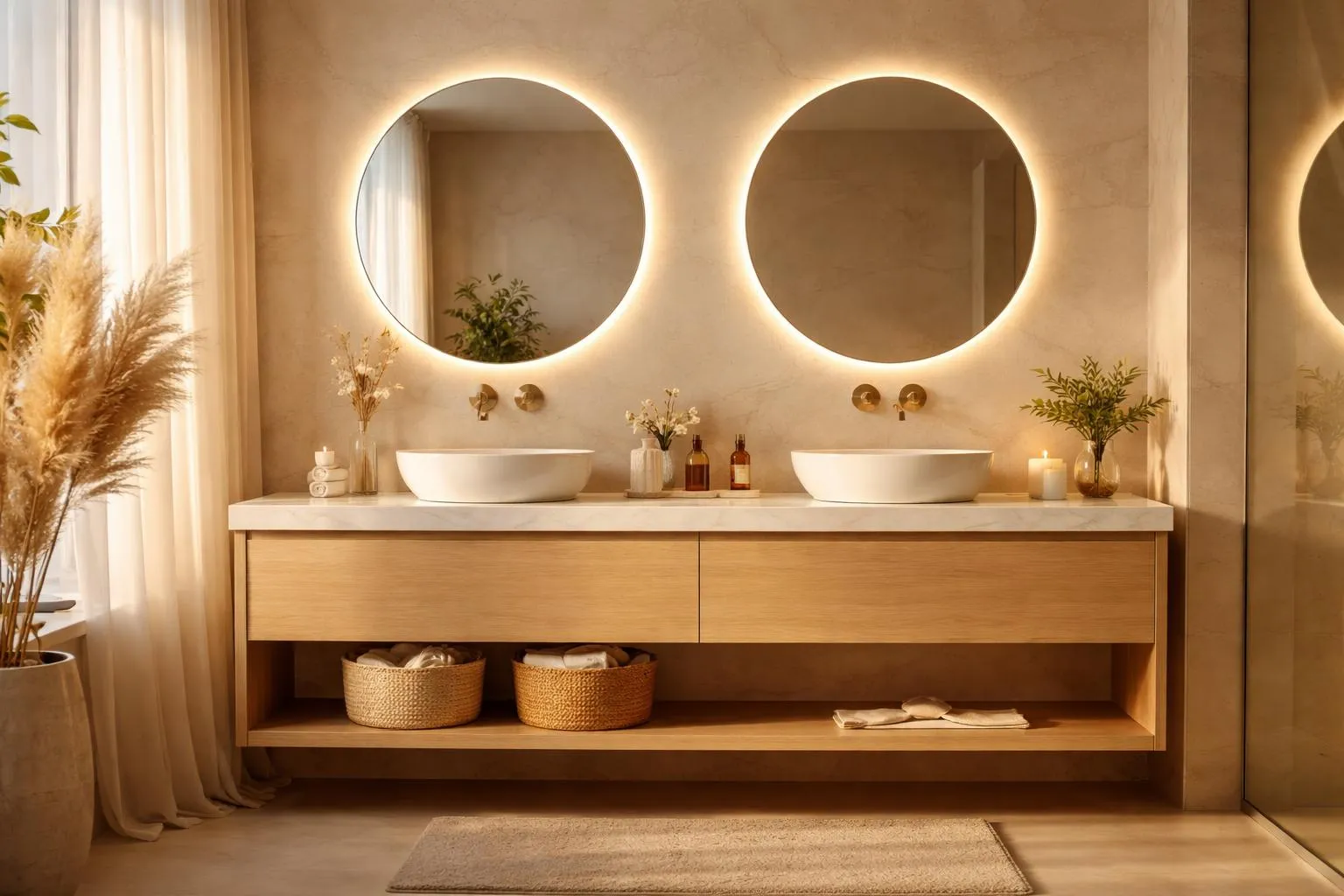
Bathroom vanity cabinets do more work than people give them credit for. They hide plumbing, carry daily clutter, support the sink, and set the tone for the whole room. In many bathrooms, the vanity is the first thing you notice and the thing you use most.
That’s why choosing one deserves more thought than picking a color and calling it done.
If you’re planning a renovation, building a new home, or managing cabinets for a new construction project, this guide will help you make smart decisions on bathroom vanity cabinets, style, layout, materials, and installation. I’ll also cover where RTA options make sense, when custom work is worth it, and how to avoid the mistakes that cost time and money later.
A bathroom vanity cabinet affects three things at once: function, appearance, and long-term durability.
Function is the obvious one. You need storage that works for real life, not showroom life. Drawers should open fully. Doors should clear nearby fixtures. The cabinet depth should fit the room without making it feel cramped.
Appearance matters too. A vanity can make a small bathroom feel cleaner and more open, or it can make an otherwise nice space look awkward and dated.
Then there’s durability. Bathrooms deal with water, steam, spills, cleaning products, and constant use. A cabinet that looks fine on day one can start swelling, chipping, or loosening surprisingly fast if the materials or build quality aren’t right.
That’s where good cabinet design really earns its keep. A well-designed vanity doesn’t just look better. It holds up better.
Before style, finish, or hardware, get the size right.
A vanity that is too small leaves you short on storage and counter space. One that is too large can squeeze traffic flow and make the room feel off-balance. In tight bathrooms, even a few extra inches can be the difference between comfortable and annoying.
Single vanities usually range from 24 to 48 inches. These work well in powder rooms, guest baths, and smaller primary bathrooms.
Larger bathrooms often use 60 to 72 inch vanities, sometimes with double sinks. These are common in family homes and new construction where shared use matters.
Most vanity cabinets fall around 20 to 24 inches deep. Shallower options help in compact bathrooms. Standard height used to run lower, but comfort-height vanities are now common because they feel better for everyday use.
If you’re working with a professional cabinet maker, sizing can be adjusted to fit the room instead of forcing the room to fit a stock unit. That matters a lot in older homes where walls are rarely as straight as people hope.
This is one of the first style decisions, but it affects cleaning and storage too.
Freestanding vanities are the more traditional option. They sit on the floor and usually offer the most enclosed storage. They’re practical, flexible, and easy to work into many bathroom styles.
They also tend to feel substantial, which can be a plus in larger bathrooms.
Floating vanities mount to the wall and leave open space below. They create a cleaner, lighter look and can make a small bathroom feel bigger. They’re also easier to clean underneath, which sounds minor until you’ve had to wipe around a vanity base for years.
The tradeoff is that floating vanities may offer a little less storage, and the wall structure needs to support the installation properly.
For commercial projects, modern custom homes, and upscale renovations, floating vanities are popular for good reason. They look sharp without trying too hard.
Style should match the home, but it should also age well. Bathrooms are expensive to redo. Chasing a trend too hard usually gets old fast.
Shaker vanities remain a safe and smart choice. The lines are clean, simple, and flexible. They work in modern, transitional, and traditional spaces depending on finish and hardware.
Flat-panel doors suit modern spaces and minimalist bathrooms. They look clean and uncluttered. If you want a sleek room with a simple counter top and understated hardware, this is a strong option.
These work best when the rest of the home already leans classic. In the right setting, they feel polished. In the wrong setting, they can feel heavy.
Some vanities combine drawers, doors, and open shelving. Open shelving looks good in staged photos. In real life, it works best when you’re willing to keep it neat. For busy family bathrooms, closed storage usually wins.
This is where people often make decisions based on looks, then regret them six months later.
A good vanity cabinet should match how the bathroom is actually used.
Drawers are usually better for toiletries, grooming tools, makeup, and personal items. You can see what you have. You don’t have to kneel and reach into the back of a dark cabinet.
Under-sink cabinets are useful for taller items, cleaning supplies, and bulk storage. They’re common because plumbing often takes up the center area.
Built-in organizers, pull-out trays, drawer dividers, and tilt-out storage can make a vanity much more useful without increasing its footprint.
For builders and renovation teams, this is an easy place to add practical value. Good storage details are the sort of thing clients notice every morning.
RTA, or ready-to-assemble, vanities can be a good solution in the right project. Custom cabinetry can be the better move in others. Neither is automatically right.
RTA cabinets are often chosen for tighter budgets, shorter timelines, rental updates, and straightforward layouts. If the bathroom dimensions are standard and the finish choices work with the design plan, RTA can save money.
They can also work well for multi-unit projects where consistency matters and customization is limited.
Custom work makes more sense when the room has unusual dimensions, specific storage needs, premium design expectations, or coordination requirements with other built-ins and counter tops.
It also matters when you want better materials, stronger construction, or a more precise fit. Custom vanity cabinets can solve awkward corners, offset plumbing, unusual widths, and design requests that stock options simply can’t handle.
A skilled cabinet maker can also help prevent one of the most common renovation headaches: discovering too late that the cabinet, sink, faucet, mirror, lighting, and wall space don’t quite work together.
That’s a frustrating problem because it’s avoidable.
Bathrooms are rough on materials. Moisture resistance matters.
Plywood box construction is generally a stronger and more durable option than lower-grade particleboard, especially in damp environments. Solid wood can be excellent for doors and face frames, though it still needs proper finishing and care.
Thermofoil, laminate, painted MDF, and wood veneer each have their place depending on budget, finish goals, and usage levels.
What matters most is not the material name alone, but the quality of fabrication and finishing. Good cabinet design and careful manufacturing make a big difference in how the vanity performs over time.
The same goes for the counter top. Quartz is a common favorite because it’s durable, easy to clean, and available in many looks. Stone options can also work well, though maintenance varies. If the bathroom gets heavy use, low-maintenance surfaces usually make life easier.
The counter top has a big impact on both appearance and function.
If you want something clean and durable, quartz is a very practical choice. It handles daily use well and pairs easily with many cabinet finishes.
Solid surface materials can also work well in modern bathrooms. Natural stone has its appeal, but it may need more care depending on the material.
Color matters too. A dramatic counter top can become the focal point, while a quieter one lets the cabinet style lead. Neither is wrong. It depends on the room.
For busy projects, I’d keep this in mind: the best bathroom materials are usually the ones people don’t have to think about every day.
Bathroom vanities are rarely standalone decisions. They’re tied to plumbing, electrical, flooring, tile, mirrors, and lighting.
That means planning early helps.
Moving plumbing adds cost. Sometimes it’s worth it. Sometimes it isn’t. A good cabinet design process should account for existing conditions before the vanity is finalized.
A double vanity with poor mirror spacing or badly placed sconces can look odd even if the cabinet itself is beautiful. These elements should be planned as a set.
It sounds basic, but it gets missed often. Check swing clearance near toilets, shower glass, walls, and adjacent cabinetry.
A family bathroom, a luxury ensuite, and a rental suite should not all get the same vanity approach. Usage should drive the design.
This part matters as much as the product.
A good cabinet maker should ask smart questions, not just quote a price. They should want to know the room size, plumbing layout, storage needs, finish preferences, installation timing, and how the vanity connects with the rest of the space.
You also want clear communication about materials, lead times, hardware, installation details, and counter tops. Vague answers early tend to become expensive problems later.
If you’re building multiple units or managing a renovation schedule, reliability matters even more. On-time production, consistent quality, and accurate measurements are not glamorous selling points, but they are the ones that keep projects moving.
The best bathroom vanity cabinet is the one that fits the space, supports daily use, and still looks right years from now. That usually means balancing style with practical choices on size, storage, materials, and counter top selection.
RTA options can work well for certain bathrooms. Custom cabinetry often wins when fit, finish, and long-term value matter more. For many projects, especially renovations and new construction with specific design goals, working with an experienced cabinet maker leads to fewer compromises and a better result.
Bathroom design gets a lot of attention for tile, lighting, and fixtures. Fair enough. Those details matter. But the vanity does the quiet heavy lifting. Get that part right, and the whole room feels more resolved.

.png)


